
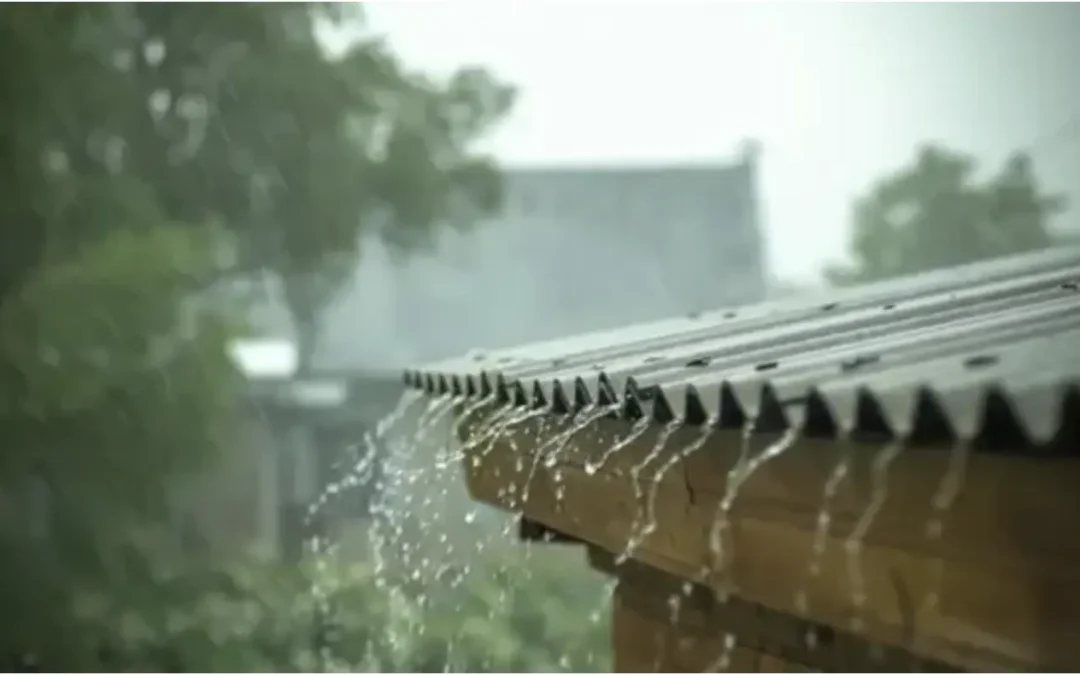
Summer in Gauteng means hot days, big thunderstorms and heavy downpours. Most of our rainfall arrives between October and March, often in short, intense storms that drop a lot of water in a short time. SciELO+1
If you use a borehole, you may have noticed something interesting after these storms:
- Water looks brown or milky for a day or two
- There is a new earthy or metallic taste
- A slight smell appears, even if the water looks clear
- Taps or filters pick up more fine sediment
This is not your imagination. Rain season really does affect borehole water. In this blog we unpack why that happens, what is normal, and when a change in water after storms is a red flag that you should test.
- How Gauteng’s summer rain interacts with boreholes
To understand the changes, it helps to picture the basic setup.
- Rain falls on your roof, paving, lawn and surrounding land.
- Some water runs off into streets, stormwater drains and rivers.
- Some water soaks into the ground and moves downward through soil and rock.
- Over time this recharge feeds the underground aquifer that your borehole taps into.
In parts of Gauteng, the geology includes fractured rock and dolomitic aquifers, which can move water quite quickly. These aquifers can be productive but also vulnerable, especially where the water table is shallow or the rock is highly fractured. Department of Water and Sanitation+1
So when you get heavy rain, you are not only filling up dams and rivers. You are also pushing a lot of fresh water, soil particles and sometimes pollution toward the underground water that your borehole uses.
- Change 1: Brown or cloudy water after storms
The most common change people notice after a big storm is colour and clarity.
Typical symptoms:
- Water runs slightly brown, yellowish or “tea coloured”
- It looks milky or cloudy inside a glass
- Sediment collects in filters or in the bottom of a bucket
Why this happens
After intense rain, more fine material can move through the soil and into cracks and cavities in the rock. This includes:
- Clay and silt particles
- Organic material from soil and roots
- Iron and manganese that were previously settled
If your borehole is relatively shallow, or drilled into very fractured zones, it can pick up this “pulse” of material more easily.
High turbidity (cloudiness) is not only an appearance issue. Studies show that high turbidity often correlates with increased contamination risk, because the particles can protect bacteria and make disinfection less effective. SpringerLink
When it is a concern
A brief, mild colour change that clears quickly can be a normal response to storms. It becomes a concern when:
- Water stays brown or cloudy for several days
- Sediment loads are much higher than usual
- There is a history of microbiological problems in the area
- Children, elderly people or people with weak immune systems drink the water daily
In those cases, you should not guess. A SANS 241 test will show whether the problem is cosmetic or a real health risk.
- Change 2: New smells and tastes
After heavy rain, some families report:
- Earthy, musty or “damp soil” smells
- Metallic tastes
- A slight “swampy” or sulphur smell
Why this happens
Rain driven changes can:
- Wash more organic matter into the aquifer, which can affect smell and taste
- Mobilise iron, manganese and other minerals that give a metallic taste and staining
- Disturb the balance of dissolved gases in the water, which can produce odours
Smell and taste alone do not prove that water is unsafe, but any persistent change is a useful early warning sign.
If your water suddenly tastes very different after storms, especially together with colour change, it is sensible to treat it as “suspect” until tested.
- Change 3: Higher microbiological risk after big storms
This is the part that matters most for health.
Heavy rain and flooding can wash human and animal waste, soil and surface pollution into shallow groundwater and into vulnerable aquifers. International and African studies show that intense rainfall and flooding events often increase microbiological contamination in wells, boreholes and other water points. SpringerLink
In South Africa, groundwater in peri urban and rural areas is frequently exposed to:
- Pit latrines and leaking septic tanks
- Dumping sites and animal kraals
- Informal industry and waste areas
These sources can leak into groundwater over time, and the risk is higher in high rainfall areas, shallow aquifers and fractured or karst aquifers. Water Institute of Southern Africa+3Department of Water and Sanitation+3WRC+3
What that means for your borehole
Even if your borehole has been safe in the past, heavy storms can temporarily push bacteria into the water around the borehole, especially if:
- The borehole is shallow
- The casing is cracked or not properly sealed near the surface
- There are pit latrines, septic tanks or animal pens nearby
- The borehole apron and drainage are poor
The most important microbiological indicators for SANS 241 drinking water are:
- E. coli or faecal coliforms (should be zero per 100 ml)
- Total coliforms
- Standard Plate Count (general bacteria count)
A spike in these results after rain means your borehole is not fully protected from surface pollution.
- Shallow vs deep boreholes in rain season
Not all boreholes react the same way.
Shallow or hand dug type boreholes
- More strongly influenced by recent rainfall
- More exposed to nearby surface pollution
- More likely to show rapid changes in clarity and bacteria after storms
Deeper, well cased boreholes in more confined aquifers
- Usually more stable
- Still can be affected if there are fractures, poor sealing or strong hydraulic connections
In parts of Gauteng with dolomitic rock, water can move quickly through underground cavities and fractures. This can be good for supply but can also carry pollution much faster than in tight rock. WRC Website
This is why some boreholes that “have always been fine” can suddenly show problems after land use changes, new pit latrines, or a period of intense storms.
- What you should do after heavy storms
Here is a simple practical checklist for your borehole after big rain events.
Step 1: Look at the water
Fill a clear glass or white bucket from the borehole supply and check:
- Colour
- Cloudiness
- Visible floating bits or grit at the bottom after five minutes
If it looks very different from normal, avoid drinking it until you have understood the cause.
Step 2: Smell and taste gently
Without swallowing a full glass, do a careful smell and a small sip once or twice:
- Any new musty, swampy, rotten egg or chemical smell
- Any strong metallic or “funny” taste
If yes, switch to a safe alternative source for drinking and food preparation until tested.
Step 3: Check your filters and tanks
- Open your filter housings and see if cartridges are clogging faster than usual
- Look inside tanks with a torch for extra sediment or colour change
- Check that lids, vents and overflow pipes are not letting in surface water and debris
Step 4: Decide when to test
It is time to test if:
- Colour and cloudiness remain for more than a day or two
- There is any history of E. coli or coliforms in your previous tests
- Young children, elderly people or people with health conditions drink the water every day
- You have added or moved pit latrines, septic tanks, animal kraals or soakaways near the borehole
A SANS 241 borehole test before or during rain season gives you a clear baseline. Repeat testing after visible changes gives you proof of what the storms have done.
- How to protect your borehole from rain related contamination
Some improvements are simple and inexpensive, others are part of a full treatment design.
Around the borehole head
- Make sure the borehole head and casing stick above ground level.
- Create a concrete apron that slopes away from the borehole to prevent ponding.
- Seal any gaps between casing and concrete.
- Direct roof water and surface water away from the borehole area.
In your plumbing and storage
- Keep tank lids closed and insect proof.
- Fit basic pre filters before tanks to catch sand and grit.
- Install proper sediment and carbon filters before water enters the house.
- Consider a UV disinfection unit for whole house or at least for the main drinking line.
In your long term plan
- Keep pit latrines, septic tanks and soakaways well away from your borehole, and downhill if possible.
- Record land use changes around your property and on neighbouring plots.
- Plan regular testing and filter maintenance rather than waiting for visible problems.
- How H₂OGuru can help: Sample to Solution for rain season boreholes
H₂OGuru is set up to help Gauteng households handle exactly this kind of challenge.
Step 1: Sample
We collect water from your borehole tap, tank, or the point where the water enters your home. If you are outside our immediate area, we arrange a courier collection with proper sample bottles and instructions.
Step 2: Test
Your sample goes to a SANAS accredited laboratory and is analysed against SANS 241:2015, the South African drinking water standard. We focus on:
- Microbiological safety (E. coli, coliforms, Standard Plate Count)
- Turbidity and colour
- Key chemical and mineral issues such as hardness, iron, manganese, nitrates and others that often change with rainfall patterns
Step 3: Clarity Report
You receive a one page Clarity Report that shows:
- Which results are safe
- Which is borderline
- Which are outside the SANS 241 limits
Each flagged item has a short plain language explanation.
Step 4: Treatment design and verification
Based on your results and budget, we can design:
- Sediment and carbon filtration to handle turbidity and taste
- Iron and manganese treatment where needed
- Disinfection systems such as UV for microbiological control
- Scale control solutions like ScaleStop where hardness is a problem
If you want proof, we can test again after installation so you can see the improvement after storms.
- Simple summary: What to remember about rain and borehole water
When you think about summer rain and your borehole, remember these key points:
- Summer storms recharge your aquifer but can also carry fine particles and pollution into vulnerable boreholes.
- Brown or cloudy water after storms is a warning sign, especially if it lasts.
- Heavy rain events are linked worldwide to spikes in microbiological contamination of water sources. ACS Publications
- Shallow and poorly protected boreholes are most at risk.
- A regular test and a properly designed treatment system turn an unpredictable borehole into a reliable household supply.
If your water changes after storms and you are not sure what it means, do not rely on guesswork. A simple test and a clear report will tell you whether you need peace of mind only, or a real plan of action.
- Next step: Check your borehole after the next storm
The next time a big thunderstorm passes over your suburb, use that moment.
- Wait a few hours until the borehole has been pumping again.
- Look at a glass of water and notice colour and clarity.
- Smell and taste carefully.
- Check your filters and tank.
If anything looks or feels wrong, contact H₂OGuru. We will help you choose the right SANS 241 test and map out a simple Sample to Solution plan so that Gauteng’s rain season works for you, not against you.