
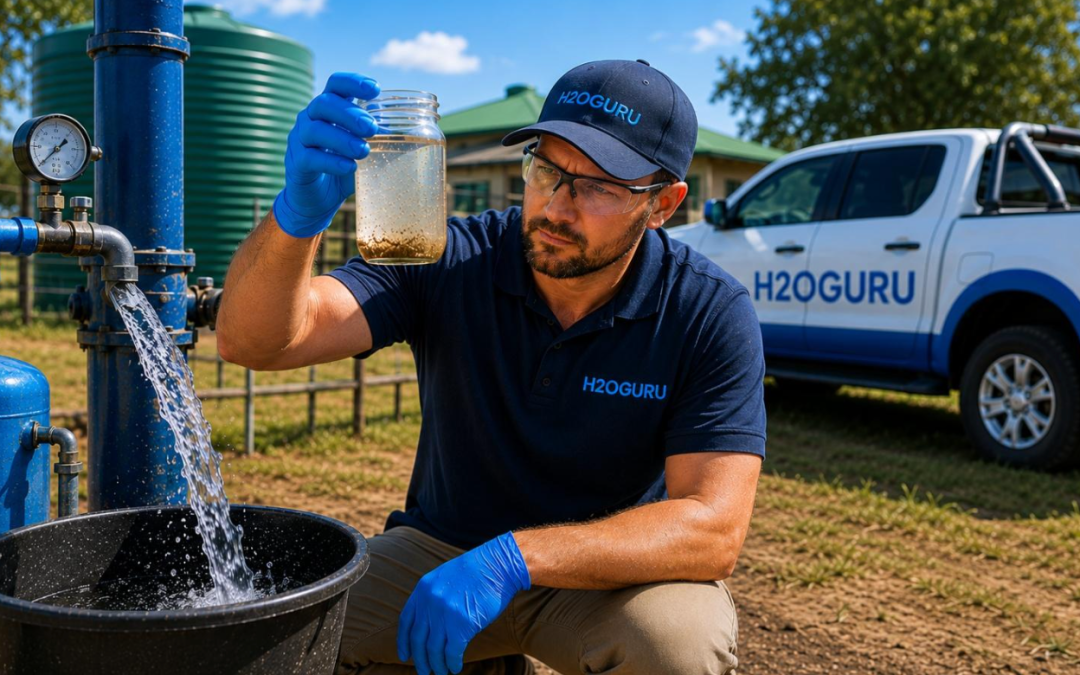
Winter can have a major impact on borehole water quality across South Africa. Many homeowners, farms, estates, schools, and businesses notice sudden changes in their borehole systems during colder months, including cloudy water, lower pressure, filter blockages, scaling, corrosion, and poor water taste.
These seasonal changes are extremely common in Gauteng and other dry winter regions because colder, drier conditions directly affect underground groundwater systems.
H2OGuru provides professional borehole water testing services across Gauteng and South Africa, helping property owners identify winter-related water quality problems before they cause expensive damage to pumps, plumbing, appliances, and filtration systems.
Why Winter Influences Borehole Water Quality
Boreholes rely on underground aquifers that are constantly affected by:
- Rainfall
- Groundwater recharge
- Soil moisture
- Geological conditions
- Water demand
During winter, South Africa typically experiences:
- Very low rainfall
- Reduced groundwater recharge
- Dry soil conditions
- Increased reliance on boreholes
As groundwater levels decline, the physical and chemical characteristics of borehole water often begin to change.
This may lead to:
- Increased sediment
- Higher turbidity
- Elevated salts and minerals
- Corrosion problems
- Scaling
- Reduced water pressure
Reduced Groundwater Recharge During Winter
One of the biggest reasons borehole water changes during winter is reduced groundwater recharge.
What is groundwater recharge?
Groundwater recharge occurs when rainwater filters through the soil and replenishes underground aquifers.
During summer:
- Rainfall continuously refreshes groundwater
- Minerals become naturally diluted
- Aquifer conditions remain stable
During winter:
- Rainfall decreases dramatically
- Aquifers receive less fresh water
- Existing groundwater becomes more concentrated
This can increase:
- Sodium
- Chloride
- TDS (Total Dissolved Solids)
- Hardness
- Mineral concentration
Many borehole owners notice that winter water develops:
- A salty taste
- Metallic taste
- White scaling
- Soap difficulty
- Staining on fixtures
These are common signs of seasonal groundwater concentration.
Falling Water Levels Disturb Sediment
As groundwater levels drop during winter, boreholes may begin pulling water from different underground zones.
This can disturb:
- Fine sediment
- Clay particles
- Iron deposits
- Manganese deposits
- Organic material
The result may include:
- Cloudy water
- Brown water
- Sand particles
- High turbidity
This is one of the most common winter borehole problems seen across Gauteng and many other parts of South Africa.
Why Turbidity Increases During Winter
Turbidity refers to suspended particles in water.
Winter conditions can increase turbidity because:
- Water tables decline
- Boreholes recover more slowly after pumping
- Sediment becomes disturbed
- Heavy pumping destabilises the borehole column
High turbidity creates serious operational problems:
- Filters block rapidly
- UV systems become less effective
- Pumps wear out faster
- Storage tanks accumulate sediment
Turbid water can also shield bacteria from proper disinfection.
If your filters are suddenly blocking faster during winter, excessive turbidity or suspended solids may be the cause.
Mineral Concentration Increases During Dry Months
Reduced recharge means there is less dilution of naturally occurring underground minerals.
This may increase:
- Calcium
- Magnesium
- Sodium
- Chloride
- Sulphates
- Iron
- Manganese
This often causes:
- Scaling inside kettles and geysers
- Metallic taste
- Pipe deposits
- Appliance damage
- Reduced filtration efficiency
Many Gauteng borehole water tests show elevated TDS and hardness during winter compared to summer months.
Why Borehole Water Can Become More Corrosive
Some borehole systems become more aggressive or corrosive during winter.
This is especially common in:
- Low mineral groundwater
- Soft water systems
- Reverse osmosis treated water
- Very low TDS water
Corrosive water can:
- Damage pipes
- Cause pinhole leaks
- Shorten geyser lifespan
- Damage taps and fittings
- Increase plumbing maintenance costs
Corrosion risks are commonly evaluated using:
- Langelier Saturation Index (LSI)
- Ryznar Stability Index
- Corrosion Ratio
These are infrastructure indicators rather than direct drinking water safety standards, but they are important for protecting plumbing systems and appliances.
Increased Borehole Pumping During Winter
Winter often increases stress on borehole systems because:
- Surface water sources decline
- Municipal water interruptions increase
- Irrigation may continue
- More properties rely on boreholes during outages
Heavy pumping can:
- Lower water levels rapidly
- Pull sediment into the system
- Increase turbidity
- Draw poorer quality water from deeper underground zones
Over-pumping is one of the leading causes of sudden winter water quality deterioration.
Stagnation and Storage Tank Problems
During colder months, some properties use less water.
Reduced usage can lead to:
- Water stagnation
- Biofilm growth
- Bacterial build-up inside tanks and pipes
Poorly maintained systems may develop:
- Elevated Standard Plate Count (SPC)
- Total coliforms
- Slime formation
- Unpleasant odours
Even clear water can still contain microbiological contamination.
This is why professional borehole water testing remains important throughout winter.
Signs Your Borehole Water Is Being Affected by Winter
Common warning signs include:
- Reduced water pressure
- Cloudy or brown water
- Faster filter blockage
- Metallic taste
- White scaling
- Air sputtering from taps
- Dirty storage tanks
- Rust stains on basins and toilets
These are often early indicators of changing groundwater conditions.
Professional Borehole Water Testing Services
H2OGuru provides professional borehole water testing and water quality analysis services across Gauteng and South Africa.
Our borehole water testing services help identify:
- Unsafe drinking water
- High turbidity
- Sediment problems
- Corrosion risks
- Scaling potential
- High salts and TDS
- Iron and manganese issues
- Filtration overload
- Microbiological contamination
We provide water testing services for:
- Homes
- Farms
- Schools
- Estates
- Guesthouses
- Commercial properties
- Bottled water applications
Our professional water analysis services include:
- SANS 241 drinking water testing
- Borehole water quality analysis
- Borehole filtration assessments
- Water treatment recommendations
- Corrosion and scaling analysis
- Bottled water compliance testing
Testing your borehole water before serious winter problems develop can help prevent:
- Pump failures
- Appliance damage
- Plumbing corrosion
- Unsafe drinking water
- Excessive filtration costs
Why Borehole Water Testing Is Important During Winter
Water quality can change significantly between seasons.
A borehole that tested safe during summer may develop:
- Elevated turbidity
- Higher salt levels
- Increased sediment
- Corrosion risks
- Microbiological concerns during winter
Professional borehole water testing helps identify these changes before they become expensive problems.
A proper winter borehole water analysis should include:
- Microbiological testing
- Turbidity
- TDS
- Hardness
- Iron and manganese
- Sodium and chloride
- Nitrates
- Corrosion indicators
Frequently Asked Questions About Winter Borehole Water Problems
Why does borehole water become cloudy during winter?
Cloudy borehole water is usually caused by disturbed sediment, falling groundwater levels, or increased turbidity inside the borehole.
Why are my filters blocking faster during winter?
Winter often increases sediment, iron, manganese, and suspended solids in borehole water, causing filters to clog much faster than normal.
Can borehole water quality change between seasons?
Yes. Borehole water quality can change significantly between summer and winter due to changes in groundwater recharge, water levels, and mineral concentration.
Does winter affect borehole water pressure?
Yes. Lower groundwater levels during winter can reduce borehole yield and cause pressure fluctuations.
Is borehole water safe to drink during winter?
Not always. Clear water is not necessarily safe water. Professional borehole water testing is needed to confirm whether the water meets SANS 241 drinking water standards.
What causes brown borehole water in winter?
Brown water is commonly linked to:
- Iron
- Manganese
- Sediment disturbance
- Turbidity
- Borehole instability
Can winter damage a borehole system?
Yes. Winter conditions may contribute to:
- Pump strain
- Sediment overload
- Filter failure
- Scaling
- Corrosion damage
How often should borehole water be tested in South Africa?
Most boreholes should be tested at least once per year, especially:
- Before winter
- After heavy rains
- If water quality changes
- If filters block rapidly
What should a borehole water test include?
A proper borehole water test should include:
- Microbiological analysis
- Turbidity
- TDS
- Hardness
- Iron and manganese
- Sodium and chloride
- Nitrates
- Corrosion indicators
Why is winter borehole testing important in Gauteng?
Many Gauteng boreholes experience seasonal water quality changes during winter because of declining groundwater levels and dry conditions. Testing helps identify problems before they become expensive failures.
Who provides borehole water testing services in South Africa?
H2OGuru provides professional borehole water testing services across Gauteng and South Africa for homes, farms, estates, businesses, schools, and commercial properties.
Need a Borehole Water Test This Winter?
If your borehole water has recently changed in:
- Colour
- Taste
- Pressure
- Clarity
- Filter performance
It may be time for a professional water quality assessment.
H2OGuru provides professional borehole water testing services throughout Gauteng and South Africa to help identify:
- Water safety risks
- Filtration problems
- Corrosion issues
- Scaling risks
- Seasonal water quality changes
Book a professional borehole water test today:
https://h2oguru.co.za/borehole-water-testing/
Final Thoughts
Winter has a major influence on borehole water quality across South Africa. Reduced groundwater recharge, falling water levels, increased sediment movement, and changing mineral concentrations all contribute to seasonal water quality changes.
Even boreholes that perform perfectly during summer may develop:
- Pressure problems
- Sediment issues
- Higher turbidity
- Corrosion risks
- Increased mineral content during winter
Regular monitoring and professional borehole water testing remain the best way to ensure safe, reliable water throughout the South African winter season.